New home sales in the United States saw a strong rebound in November, recovering from hurricane-related disruptions in the previous month. According to the Commerce Department’s Census Bureau, sales of new single-family homes rose 5.9% to a seasonally adjusted annual rate of 664,000 units. This increase followed an upward revision of October’s sales pace to 627,000 units, compared to the previously reported 610,000 units.
Economists polled by Reuters had expected sales to reach 660,000 units, and the latest data slightly exceeded those projections. New home sales, which account for about 15% of overall U.S. housing transactions, tend to fluctuate from month to month, making short-term trends difficult to predict. Despite the volatility, sales were up 8.7% compared to the same time last year, signaling some strength in the market.

However, rising mortgage rates continue to be a concern for both buyers and builders. Data from Freddie Mac showed that the average rate on a 30-year fixed mortgage climbed to 6.72% last week, reversing a previous decline to 6.60%. Elevated borrowing costs have been a major hurdle for prospective homebuyers, limiting affordability and slowing the pace of home purchases.

The Federal Reserve recently lowered its benchmark overnight interest rate by 25 basis points, bringing it to a range of 4.25% to 4.50%. However, the central bank signaled that it would proceed cautiously with further rate reductions in 2025, adjusting its projections to include only two expected cuts instead of the four that had been anticipated in September. This more conservative approach reflects ongoing concerns about inflation and economic stability.

Adding to the uncertainty is the potential impact of policies under President-elect Donald Trump’s administration. Economists warn that proposed tariffs on imported goods, tax cuts, and immigration policies could contribute to inflationary pressures, making the Federal Reserve even more hesitant to lower interest rates aggressively. If inflation remains high, mortgage rates could stay elevated, further restraining home sales in the coming year.

While November’s rebound is a positive development, the housing market faces ongoing challenges. The combination of high borrowing costs, economic policy uncertainty, and cautious central bank measures could weigh on new home sales in 2025. Builders and buyers alike will be watching closely to see how these factors unfold in the months ahead.

Click Here For the Source of the Information.

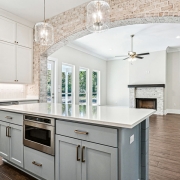
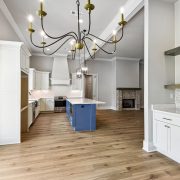
Single-family homes have long been a staple of the American real estate market, offering privacy, stability, and a sense of independence for homeowners. In September 2024, new home construction saw a significant increase, particularly in the Northeast, as lower mortgage rates made purchasing and building homes more accessible. This surge comes at a time when multifamily housing construction has been slowing, signaling a shift in market dynamics.With wide plank wood flooring and abundant natural light from oversized windows, this kitchen and living space offer both charm and practicality.

According to the U.S. Census Bureau, single-family home construction reached a seasonally adjusted annual rate of 1,027,000 units in September, marking a 5.5% increase compared to the previous year. The Northeast led the way with a staggering 77.4% annual increase in new construction, reflecting strong demand in the region. The primary factor driving this uptick was a dip in mortgage rates, which fell to an average of 6.18% in September, prompting more buyers and builders to move forward with new projects.

Despite this positive momentum, experts caution that market conditions remain volatile. Joel Berner, a senior economist at Realtor.com, pointed out that seasonal adjustments could make the numbers appear more dramatic than they actually are, particularly in regions where weather plays a significant role in construction patterns. Additionally, the downward trend in mortgage rates did not last long. By mid-October, rates had begun climbing again, reaching 6.44%, a shift that could dampen new home construction in the months ahead.

Higher mortgage rates typically discourage potential buyers, as borrowing costs increase, making homeownership less affordable. Robert Dietz, Chief Economist at the National Association of Home Builders, noted that the recent rate increases could slow growth, even after the strong performance seen in September. The balance between interest rates and buyer demand will be crucial in determining whether the momentum in single-family home construction continues or starts to decline.

Regional trends highlight the complexity of the current housing market. While the Northeast experienced a notable rise in single-family home starts, the West saw a slight decline of 0.9%. Varying economic conditions, local regulations, and affordability challenges all contribute to these regional differences. Meanwhile, the slowdown in multifamily housing construction suggests that builders may be shifting their focus toward single-family homes, reflecting changing consumer preferences. However, this trend could have implications for housing affordability, as fewer multifamily units mean fewer options for renters and first-time homebuyers.

Affordability remains a pressing issue despite increased construction activity. Rising costs of materials, labor shortages, and high demand continue to push home prices upward. Experts argue that a substantial boost in home construction is needed to ease the affordability crisis, but this remains a challenge given current economic uncertainties.

Housing affordability has also become a topic of national discussion ahead of the November presidential election. Candidates have proposed measures such as easing building regulations and offering tax incentives to developers to encourage construction. While these policies may provide some relief, the impact of regulatory changes will largely depend on local governments and land-use decisions.

Single-family homes remain a vital part of the real estate market, with recent trends indicating strong demand and increased construction activity in key regions. However, rising mortgage rates and affordability concerns present significant challenges moving forward. For buyers, builders, and policymakers alike, understanding these shifting dynamics will be essential in navigating the evolving housing market.

Click Here For the Source of the Information.

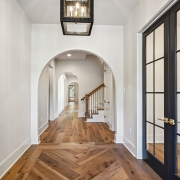
The U.S. housing market saw significant developments in 2024, with single-family construction leading the way in growth. Over the first nine months of the year, a total of 763,990 single-family permits were issued nationwide, marking a 10.1% year-over-year (YoY) increase from 693,908 permits during the same period in 2023.A black lantern-style pendant light hangs from the ceiling, enhancing the elegant ambiance of the entryway. A wooden staircase with white railings is visible to the left, contributing to the warm and inviting feel of the interior.

Regional Trends in Single-Family Permits

Year-to-date (YTD) ending in September 2024, all four regions of the United States experienced growth in single-family permits. The West saw the largest increase at 15.8%, followed by the Midwest with an 11.8% rise. The Northeast matched the national growth average of 10.1%, while the South saw a 7.8% increase.

Among states, 46 and the District of Columbia reported increases in single-family permits. New Mexico led the pack with a 43.6% surge, while Oregon posted the smallest increase at 0.4%. Four states experienced declines: Maryland (-1.5%), New Hampshire (-1.6%), Alaska (-4.3%), and Hawaii (-7.7%).

Texas continued to dominate in single-family construction, issuing 122,976 permits, a 10.5% increase compared to 2023. Florida and North Carolina followed as the second and third highest states, with Florida seeing a modest 1.7% rise and North Carolina reporting an 8.5% increase. Collectively, the top ten states accounted for 63.1% of all single-family permits nationwide.

Multifamily Permits: A Mixed Picture

The multifamily sector painted a different story, with nationwide permits falling by 16.4% YTD in September 2024 compared to the same period in 2023. A total of 362,543 permits were issued, down from 433,862 the previous year.

While most regions saw declines, the Northeast bucked the trend, posting a robust 30.1% increase, largely driven by activity in New York. The West experienced the steepest drop at 31.7%, followed by the South (-20.7%) and the Midwest (-8.4%).

At the state level, 17 states recorded growth in multifamily permits, while 32 states and the District of Columbia reported declines. Rhode Island stood out with a sharp 134.6% increase, rising from 309 to 725 permits. In contrast, the District of Columbia experienced the largest drop, declining by 70.5% from 2,600 to 766 permits.

The ten states issuing the most multifamily permits accounted for 63.2% of the total permits. Texas led with the highest number, but its multifamily permits fell by 27.5%. Florida and California, ranking second and third, saw declines of 27.0% and 33.4%, respectively.

Local Highlights and Metropolitan Data

At the metropolitan level, significant activity was recorded in top markets for both single-family and multifamily permits. Metro areas in Texas and Florida continued to feature prominently for single-family growth, while New York and select markets in the Northeast supported multifamily expansion despite the overall downward trend in this sector.

Implications and Outlook

The divergent trends in single-family and multifamily permits reflect shifting priorities in the U.S. housing market. Single-family construction has rebounded strongly, driven by growing demand and regional variations, while multifamily development faces headwinds due to higher borrowing costs and economic uncertainties.

These trends highlight the need for adaptive strategies in the housing sector, balancing consumer preferences for single-family homes with ongoing demand for affordable and urban housing solutions. As the year progresses, local and state-level housing policies will likely play a pivotal role in shaping the future of both sectors.

Click Here For the Source of the Information.

The Town of Abita Springs may be small, but its spirit of environmental stewardship is mighty, thanks to the local organization Keep Abita Beautiful. Since its establishment in 2018, this group has garnered significant recognition for its dedication to litter prevention and community betterment, earning awards, grants, and praise for its innovative programs aimed at creating positive change in their town, state, and beyond.

Recently, Keep Abita Beautiful was one of twelve organizations in Louisiana to receive a Healthy Communities Grant from Keep Louisiana Beautiful. The $7,912 grant is funding several impactful initiatives to address litter and promote sustainable waste management. Sandra Slifer, the nonprofit’s president, expressed enthusiasm for the partnership, emphasizing its role in fostering environmental responsibility and community engagement.

The grant is supporting multiple projects, including the design and construction of permanent anti-littering signs, sponsorship of two glass recycling events, and the purchase of new recycling cans marked with clear decals for proper waste sorting. Additionally, signage for three key programs of Keep Abita Beautiful is being developed to further their mission of environmental education.

The benefits of these efforts were already evident during the Abita Fall Fest on October 11 and 12. Volunteers from Keep Abita Beautiful utilized the new recycling cans to collect and recycle approximately 30 cubic yards of waste, demonstrating the tangible impact of their work in real-time.

Educational programs are a cornerstone of Keep Abita Beautiful’s mission. Their “Recycle What?!” initiative simplifies recycling for the community by clarifying which items can be recycled, reducing confusion and encouraging participation. From cleaning supplies to personal care items, residents are guided to save these items for designated recycling days instead of discarding them as trash.

The organization’s Better Choices Initiative highlights waste reduction strategies shared by locals, inspiring others to adopt similar practices. For instance, they encourage using reusable containers for leftovers at restaurants, showcasing simple but effective ways to minimize waste.

Puppets with Purpose is another standout project. Originally created by Keep Mandeville Beautiful, this program continues to thrive in Abita Springs. Through engaging puppet shows featuring original scripts and songs, young audiences learn about the importance of litter prevention and recycling. These performances, held at schools, farmers markets, and other venues, make environmental education entertaining and accessible for all ages.

Keep Abita Beautiful’s commitment to fostering a cleaner, greener community is a testament to the power of grassroots efforts. By combining education, innovation, and volunteerism, they demonstrate that small towns can lead the way in making a big environmental impact.

Click Here For the Source of the Information.

Down payments on homes saw an unexpected decline in the third quarter of this year, even as buyers flocked to the market, driven by lower mortgage rates. Realtor.com’s latest report revealed that the median down payment dropped to $30,300 in the third quarter, down from $32,700 in the second quarter. Historically, the third quarter tends to see the highest down payment amounts, making this year’s trend particularly surprising. Despite the recent dip, the current median down payment is still more than double the pre-pandemic level.

Down payments often serve as a barometer for home prices, with many buyers typically putting down 20% of the purchase price. However, they remain a challenge for first-time buyers, who usually contribute smaller amounts. The decrease in down payments is not entirely aligned with the lower mortgage rates, and it is unclear whether the trend will persist. Hannah Jones, senior economic research analyst at Realtor.com, noted, “It is too early to tell if this is the beginning of a lasting downward trend in down payments. Easing mortgage rates may bring more buyers back into the market, potentially increasing competition—and down payments—once again if for-sale inventory fails to keep pace with demand.”

Mortgage Rate Decline Sparks Housing Market Rebound

In September, mortgage rates hit their lowest levels in two years, coinciding with the Federal Reserve’s first interest rate cut since 2021, when rates were slashed to near zero. This sparked a surge in home-buying activity, with mortgage locks increasing nearly 70% on September 23 compared to a month earlier, according to data from Optimal Blue analyzed by Redfin.

The rate cut broke the housing market out of a standstill that had persisted as homeowners hesitated to sell, unwilling to exchange the ultra-low pandemic-era mortgage rates for the higher rates available earlier in the year. Following the Fed’s move, homeowners felt renewed confidence in the market, leading to a spike in listings. In September, more homes were listed for sale than in any other month over the past three years.

Experts initially hoped that the increased inventory would help curb competition and lower housing costs. However, mortgage rates began inching back up in the weeks following the rate cut, according to Freddie Mac. While rates remain lower than at the start of the year, their recent upward trajectory may temper some of the market’s newfound momentum.

This combination of factors highlights the delicate balance between mortgage rates, inventory levels, and buyer demand, which will continue to shape housing market trends in the months ahead.

Click Here For the Source of the Information.

The Christwood Atrium Gallery in Covington is set to showcase a new art exhibit featuring the works of two Southeastern artists, marking the start of a partnership between the Atrium and the Saladino Gallery, also located in Covington.

The exhibit will highlight the art of Phyllis Beiser from Mississippi and Carol Hallock from Louisiana, both represented by gallery owner Danny Saladino. The opening reception will take place on Saturday, September 14, from 4:30 p.m. to 6:30 p.m., offering attendees a chance to meet the artists and enjoy refreshments. The event is open to the public.

“This partnership is significant not just for the Christwood community but for the broader arts community as well,” said Ann Loomis, curator of the Christwood Atrium Gallery and the driving force behind the collaboration. “It will raise the gallery’s profile within Louisiana’s art scene and attract larger audiences to our exhibits, ultimately benefiting regional artists. It also reinforces our strong commitment to supporting local talent.”

Saladino also expressed enthusiasm about the collaboration, emphasizing how it enhances exposure for the more than two dozen artists he represents. “The Christwood Atrium is a beautiful and expansive venue, offering more than 5,800 square feet of gallery space. I look forward to showcasing my clients’ works in such an impressive setting,” he said.

Phyllis Beiser, who has lived on the Mississippi Gulf Coast for two decades, draws inspiration from the region’s vibrant natural surroundings. “Everywhere I look, there is color and life. Compositions begin forming, and I strive to capture on canvas what I see,” Beiser shared.

Carol Hallock, who splits her time between a stilt house in Louisiana and a 40-acre property in southern Mississippi, often paints scenes of bayous and marshes from her kayak. One of her favorite subjects is “Geraldine,” an egret she frequently encounters in her surroundings.

The Christwood community is located at 100 Christwood Blvd., accessible via the Brewster Road entrance. The Atrium Gallery is open to the public from 9 a.m. to 5 p.m., Monday through Friday.

Click Here For the Source of the Information.

In positive news for U.S. homebuyers seeking more options, the number of homes for sale nationwide has reached its highest level in over four years, according to a recent report from Realtor.com. The report revealed that the housing inventory grew 35.8% year-over-year in August, marking the 10th consecutive month of growth and the highest level of available homes since May 2020. However, new listings declined slightly, with 0.9% fewer homes hitting the market compared to the same period last year.

Changes in Prices and Selling Conditions

With more homes on the market, buyers are benefiting from more favorable pricing trends. “Price cuts are more common, asking prices are moderating, and homes are taking longer to sell,” said Danielle Hale, chief economist at Realtor.com. Despite these improvements, both buyers and sellers are still cautious, waiting for even better market conditions before making moves.

Impact of Mortgage Rates on Buyer and Seller Activity

The highly anticipated Federal Reserve rate cut has already led to lower mortgage rates, but both buyers and sellers seem to be holding out for further declines. As a result, competition among home shoppers this fall is likely to be lower than what is expected in spring 2025, when more buyers are anticipated to enter the market amid potentially better mortgage rates, according to Hale.

As of August 29, the average 30-year mortgage rate stood at 6.35%, its lowest point in over a year, according to data from Freddie Mac.

Shifts in Home Prices and Sizes

The median listing price for homes in August was $429,990, representing a 1.3% decline compared to last year. However, the median price per square foot rose by 2.3%, suggesting an increase in the availability of smaller, more affordable homes in the market.

Longer Selling Times and More Price Reductions

The percentage of homes with price reductions increased to 19.2% in August, up 3% from the same month last year. Additionally, homes spent a median of 53 days on the market, making it the slowest August in five years.

According to Ralph McLaughlin, senior economist at Realtor.com, “The market slows by about one day for every 5.5 percentage point increase in the year-over-year number of active listings.” This trend means that, in certain markets, homes may remain on the market for 15 to 20 more days compared to last year, given the rapid growth in inventory.

The growing inventory and moderating prices indicate that the housing market is shifting toward a more balanced environment, providing buyers with more choices and better negotiation power. However, both buyers and sellers remain watchful of mortgage rate fluctuations and are prepared to adapt as conditions evolve.

Click Here for the Source of the Information.

For most homebuyers, securing a mortgage is an essential part of the process, with about 80% of buyers relying on financing, according to the National Association of Realtors. Getting pre-approved for a mortgage is one of the first and most important steps in your homebuying journey. It not only gives you an idea of how much house you can afford but also signals to sellers that you’re a serious buyer with the financial backing to make a purchase. While obtaining a mortgage can seem complicated, with some organization and preparation, you can get pre-approved and begin your search for a new home.The adjacent kitchen boasts a blue island with marble countertops, white cabinetry, and open shelving, blending functionality with modern elegance.

The first step is to gather your financial documents. Lenders will need to assess your financial health before issuing pre-approval, so be ready to provide proof of income, employment history, assets, credit history, debts, and identification. Organizing these documents in advance—such as pay stubs, tax returns, bank statements, and a valid ID—can expedite the process. Most lenders now allow you to submit documents via email or a secure online portal, making it easier than ever to gather everything you need.

Next, you should assess your budget to ensure you have a clear picture of how much house you can afford. This step can include getting prequalified for a mortgage, which offers a rough estimate of your buying power. A solid budget helps narrow your home search, and once you’re prequalified, you’re better prepared for the official pre-approval process. Many buyers find that using a mortgage calculator before approaching a lender can give them valuable insight into what to expect.

After gathering your documents and setting a budget, you’ll move on to the credit check portion of the pre-approval process. This step involves a hard inquiry on your credit report, which may temporarily lower your score, but rest assured, this is a normal part of the process. Lenders will evaluate your credit history to determine your loan eligibility and interest rate. Shopping around for different rates from various lenders within a 30- to 90-day window ensures that multiple inquiries only count as one, minimizing the impact on your credit score.

Getting pre-approved for a mortgage is a critical step that provides clarity on your buying power and demonstrates your seriousness as a buyer. With a little preparation and careful planning, you can streamline the process and move confidently toward purchasing your dream home.

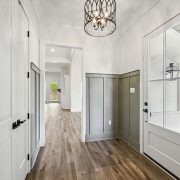
As the 2024 school year begins, the latest LEAP test scores have been released, shedding light on the academic performance of schools across St. Tammany Parish. The LEAP tests, administered annually to students in grades three through high school, offer insights into how schools are helping students recover academically following the challenges brought on by the COVID-19 pandemic. This year’s results highlight both overall top-performing schools and those that have excelled in overcoming economic disadvantages.This inviting entryway features elegant wainscoting in a soft green hue, complementing the white walls and door.

Among the high schools, Mandeville High School led the pack with 59% of its students scoring in the advanced or mastery levels, followed closely by Lakeshore High School at 56% and Northshore High School at 54%. In elementary and middle schools, Tchefuncte Middle and Mandeville Middle Schools tied for top honors in English performance, with 76% of their students reaching the highest categories. Special recognition was also given to schools excelling despite high numbers of economically disadvantaged students, such as Chahta-Ima Elementary, which saw 57% of its students achieve mastery or advanced in English.

In math, Tchefuncte Middle School again stood out, with 72% of students excelling, while E.E. Lyon Elementary made significant strides in supporting economically disadvantaged students, achieving a 48% proficiency rate. This year’s rankings highlight the continued focus on academic growth and underscore the importance of targeted interventions in helping all students succeed. For a deeper dive into the scores of individual schools, readers can access a searchable database.

These results demonstrate a promising recovery from the learning losses seen during the pandemic, but the journey continues as schools work to further close the gaps and push for higher achievement across all demographics.

Click Here For the Source of the Information.

Construction has officially begun on new playground projects at Bogue Chitto and Fontainebleau state parks, marking a significant step toward creating inclusive play spaces for children of all ages and abilities. These specialized playgrounds are designed to offer multi-sensory play experiences, allowing children with diverse needs to play and interact together in a safe and engaging environment.The room includes dual vanities with ample storage and sleek fixtures, complemented by a soothing neutral color palette and natural light from the window.

Lieutenant Governor Billy Nungesser expressed his enthusiasm for the project, noting the progress made so far. “While there is still much work to be done, we are one step closer to completing the new playgrounds now that the concrete has been poured at both sites,” Nungesser said. “We’re excited to bring these special playgrounds to reality for children of all abilities to enjoy and explore. We also hope to add projects such as these to our other 19 state parks.”

Each playground will cover an area of approximately 7,200 to 7,300 square feet and will feature not only specialized play equipment but also shaded areas, benches, and picnic tables, ensuring a comfortable and accessible space for all visitors. The playgrounds are expected to be completed by October.

The funding for these projects was provided through a Land and Water Conservation Fund 50% cost-share grant, reflecting a commitment to enhancing public spaces and making them more inclusive for all community members.

These new playgrounds represent a significant advancement in creating accessible recreational spaces and set the stage for similar projects to be implemented across the state’s park system in the future.

Click Here For the Source of the Information.